Indian Youth & Skincare: You Probably Need Less Than Instagram Is Telling You
A practical guide to acne, pigmentation, sunscreen, active ingredients and building a skincare routine that actually makes sense. You are 19. Or 22. Or 27. You open Instagram. Someone tells you that you need vitamin C. The next person says vitamin C is outdated and you need glutathione. Then comes niacinamide. Retinol. Peptides. AHA. BHA. Ceramides. Snail mucin. NAD+. Exosomes. And apparently, if you’re not “skin cycling” by Wednesday evening, you’ve failed adulthood. Here is the good news:
Your Skin Is Probably Not Asking for 10 Products.
It is asking you to understand it. That is a completely different thing. And for young Indians in particular, understanding your skin early may be far more valuable than accumulating skincare early.
First Question: Why Should Young People Even Care About Skincare?
Not because you need to prevent yourself from looking 40. Not because ageing begins at 21. Not because you need “baby skin” forever. And certainly not because normal pores, texture or occasional blemishes mean something is wrong with you. The purpose of skincare when you’re young is much more practical.
It can help you:
- maintain your skin barrier,
- protect against UV exposure,
- manage acne,
- reduce the chance of acne-related marks and scarring,
- manage oiliness or dryness,
- support pigmentation control,
- and create habits that are sustainable over decades.
Dermatologists advising people in their 20s emphasize a surprisingly uncomplicated foundation: a mild cleanser, daily sunscreen, and treatment targeted to your actual concern rather than every trend you encounter online. That is where we should begin. Not with: “Which serum is trending?” With: “WHAT DOES MY SKIN ACTUALLY NEED?”
Indian Skin Has Its Own Conversation
We need to be careful whenever someone says “Indian skin.” India does not have one skin colour. We have an enormous range of tones, undertones, oiliness levels, sensitivities and dermatological conditions. So there is no universal “Indian skincare routine.” However, there are some concerns particularly relevant to many Indian and more deeply pigmented skin tones. One of the biggest is pigmentation. Indian dermatology literature recognizes conditions such as melasma, post-inflammatory hyperpigmentation, lentigines and dark circles as major pigmentation concerns, while ultraviolet exposure can trigger or worsen pigmentation disorders. And post-inflammatory hyperpigmentation—those brown or grey marks that can remain after acne, irritation or injury—has a greater tendency to be persistent in darker skin phototypes. This creates an important skincare lesson for Indian youth:
Don’t Only Think About the Pimple.
Think About What Happens After the Pimple.
The Pimple May Last a Week.
The Mark May Stay for Months.
Imagine you develop an inflamed acne lesion. You squeeze it. Then squeeze it again because apparently it wasn’t sufficiently traumatized the first time. Then you apply:
salicylic acid,, glycolic acid,, retinol,, a scrub,, and toothpaste,
and whatever your cousin recommended. Now you don’t simply have acne. You have irritation. Inflammation. Possibly barrier disruption. And eventually: pigmentation. The American Academy of Dermatology specifically warns that picking or squeezing acne can make blemishes take longer to resolve and increase the risk of scars and dark post-inflammatory marks. This is why aggressive skincare is particularly counterproductive for pigmentation-prone skin.
Irritation Is Not Progress.
The Five Things I Would Teach Every 18–30-Year-Old About Skin
1. Your Skin Barrier Is More Important Than your Active Collection
Your outer skin barrier helps reduce water loss and protects you from environmental exposure.
When you repeatedly attack it with:
- scrubs,
- high-concentration acids,
- multiple actives,
- frequent peels,
- over-cleansing,
- or harsh acne products,
your skin can become:
- tight,
- red,
- burning,
- flaky,
- more reactive,
- and ironically harder to treat.
Social media sometimes makes irritated skin look like evidence that a product is “working.” It isn’t necessarily.
Burning Is Not a Kpi.
2. Sunscreen Is Not an Anti-Ageing Product for Old People
This might be the most valuable skincare habit you can develop while young.
UV exposure contributes to:
- sunburn,
- pigmentation,
- photoageing,
- and skin cancer risk.
For young adults, dermatologists recommend broad-spectrum sunscreen with SPF 30 or higher when exposed to daylight outdoors. And for Indian skin, there is another reason sunscreen matters: pigmentation. A systematic review looking specifically at preventing post-inflammatory hyperpigmentation in skin of colour found sunscreen to be the most consistently successful preventative strategy among those studied. So if you’re spending ₹2,000 on pigmentation serum while treating sunscreen as optional, your priorities may need rearranging.
Serum Is Treatment.
Sunscreen Is Damage Control.
You often need both.
3. Acne Is Not Caused by “dirty Skin”
This myth has probably sold millions of harsh face washes. Acne involves multiple biological factors, including follicular plugging, sebum, inflammation and microorganisms. It is not evidence that you aren’t washing your face hard enough. And scrubbing oily or acne-prone skin aggressively can make irritation worse. Dermatology guidance consistently recommends gentle skincare for acne rather than attempting to scrub blemishes away. For appropriate patients, established acne treatments can include ingredients such as: Salicylic acid Useful for clogged pores and comedonal acne. Benzoyl peroxide Helps reduce acne-associated bacteria and inflammation. Retinoids such as adapalene Among the better-established treatments for acne and prevention of clogged pores.
But if you have:
- painful nodules,
- cysts,
- significant scarring,
- persistent acne,
- or acne affecting your confidence,
- please stop buying a fifth serum and see a dermatologist.
Skincare and medical acne treatment are not the same thing.
4. You Do Not Need to Treat Everything at Once
Your forehead is oily. Your cheeks feel dehydrated. You have three pimples. Two acne marks. One dark circle. A visible pore has personally offended you. Instagram responds: “Wonderful. Here are 14 products.” No. Start by identifying:
Your Primary Concern.
Then perhaps:
One Supporting Concern.
For example:
- Primary: active acne — Supporting: post-acne pigmentation
- Primary: dehydration — Supporting: dullness
- Primary: oiliness — Supporting: congestion
This prevents one of the most common skincare mistakes:
Treating Five Minor Problems So Aggressively
That You Create One Major Problem.
5. Consistency Is More Important Than Constant Novelty
This is difficult because skincare has become entertainment.
There will always be:
- a new launch,
- a new acid,
- a new Korean ingredient,
- a new “dermatologist secret,”
- a new viral before-and-after photograph.
But your skin does not care about content cycles. AAD guidance specifically cautions against switching acne products repeatedly; treatments may need weeks to months before their benefit can be meaningfully judged. So:
Instagram Can Change Daily.
Your Skin Biology Doesn’t.
What Should a Young Person’s Basic Routine Look Like?
For many people:
Morning
1. Cleanser
Use a gentle cleanser suitable for your skin. If your skin is very dry, you may not necessarily need aggressive morning cleansing.
2. Optional Treatment
Only if there is a reason.
For example:
- vitamin C for antioxidant/brightening support,
- niacinamide for selected oily/pigmentation/barrier concerns,
- or a dermatologist-prescribed acne treatment.
- 3. Moisturiser
- Yes, even oily skin may benefit from an appropriately lightweight moisturiser.
- 4. Sunscreen
- Broad spectrum.
- SPF 30+.
- Use enough.
- —
- EVENING
- 1. Cleanse
- Remove sunscreen, oil, makeup and accumulated debris.
- 2. Treatment
- Based on your actual concern.
- 3. Moisturise
- Especially when you’re using potentially irritating acne or exfoliating treatments.
- That’s it.
- CLEANSE.
- TREAT.
- MOISTURISE.
- PROTECT.
- Everything else must justify its place.
- —
- NOW LET’S TALK ABOUT INGREDIENTS
- Young consumers are incredibly ingredient-literate compared with previous generations.
- That’s good.
- But ingredient literacy can create another problem:
- thinking that knowing an ingredient name means understanding a formulation.
- It doesn’t.
- Knowing:
- “Niacinamide = good.”
- “Vitamin C = glow.”
- “Salicylic = acne.”
- “Retinol = ageing.”
- is only the first level.
- A smarter buyer asks:
- What concentration?
- What vehicle?
- What supporting ingredients?
- What pH?
- How stable is it?
- How frequently should I use it?
- Does it suit my skin?
- Am I already getting the same active somewhere else?
- And most importantly:
- DO I ACTUALLY NEED IT?
- —
- NIACINAMIDE: GOOD INGREDIENT. NOT A PERSONALITY TYPE.
- Niacinamide is genuinely useful.
- It can support barrier function, pigmentation control and sebum-related concerns.
- But somewhere along the way skincare internet decided everybody needed:
- 5%.
- Then 10%.
- Then 15%.
- Then apparently enough niacinamide to season dinner.
- Higher is not automatically better.
- A product needs to provide enough benefit while remaining tolerable.
- Someone with sensitive skin doesn’t win because their serum has the biggest number on the bottle.
- —
- VITAMIN C: USEFUL, BUT DON’T WORSHIP IT
- Vitamin C can provide antioxidant support and help improve the appearance of uneven tone.
- It is particularly sensible in a routine where:
- sun exposure,
- pollution,
- dullness,
- and pigmentation
- are concerns.
- But formulation matters enormously because different vitamin C derivatives have different characteristics and stability profiles.
- Don’t choose vitamin C because:
- “Everybody above 21 needs it.”
- Choose it because its function makes sense for your skin.
- —
- SALICYLIC ACID: EXCELLENT TOOL, TERRIBLE HOBBY
- If you have oily, congested or acne-prone skin, salicylic acid can be very useful.
- What doesn’t make sense is:
- salicylic cleanser
- salicylic toner
- 2% salicylic serum
- salicylic spot treatment
- weekend peel.
- Your face doesn’t award loyalty points.
- One intelligently chosen exfoliating product may be enough.
- —
- RETINOIDS: THEY ARE MEDICINE-ADJACENT, NOT A SOCIAL-MEDIA CHALLENGE
- Retinoids can be incredibly useful, especially for acne, and some forms have extensive evidence.
- But they can irritate.
- Young people should not start retinoids because:
- “Anti-ageing should begin at 18.”
- That’s fear-based marketing.
- If you’re using a retinoid for acne or another appropriate indication, use it intelligently and follow professional guidance when necessary.
- —
- “BUT I WANT GLOW”
- Of course.
- Most people do.
- But we should define what “glow” means.
- Sometimes dull-looking skin is actually:
- dry skin,
- rough surface texture,
- accumulated dead cells,
- uneven pigmentation,
- poor sleep,
- or irritation.
- So buying something called Glow Serum without determining the cause isn’t particularly sophisticated skincare.
- Ask:
- WHY DOES MY SKIN LOOK DULL?
- Then treat the reason.
- —
- INDIAN YOUTH AND PIGMENTATION: THIS DESERVES SPECIAL ATTENTION
- In pigmented skin, inflammation can trigger increased melanin production.
- That means:
- pimple → inflammation → dark mark.
- rash → inflammation → dark mark.
- irritation → inflammation → dark mark.
- aggressive procedure → inflammation → potentially dark mark.
- Research specifically involving skin of colour shows PIH is often persistent and difficult to treat, and even procedures such as lasers can occasionally worsen it when not appropriately selected or performed.
- This is why Indian consumers should adopt a principle that isn’t exciting enough for influencer content but is extremely important:
- PREVENT INFLAMMATION WHEN YOU CAN.
- Don’t deliberately irritate your skin trying to brighten it.
- —
- HOW SHOULD YOUNG INDIANS SHOP FOR SKINCARE?
- Here is a much better shopping sequence.
- STEP 1 — IDENTIFY THE CONCERN
- Acne?
- Pigmentation?
- Dryness?
- Oiliness?
- Sensitivity?
- Dullness?
- STEP 2 — IDENTIFY THE FUNCTION
- Do you need:
- cleansing,
- treatment,
- hydration,
- or protection?
- STEP 3 — CHOOSE THE INGREDIENT CATEGORY
- Only now start thinking about:
- niacinamide,
- vitamin C,
- salicylic acid,
- retinoids,
- azelaic acid,
- ceramides,
- etc.
- STEP 4 — EVALUATE THE FORMULATION
- Not just the hero ingredient.
- STEP 5 — EVALUATE TOLERABILITY
- Does your skin actually like it?
- STEP 6 — GIVE IT TIME
- STEP 7 — CHANGE ONLY WHEN THERE IS A REASON
- That’s skincare maturity.
- —
- WHAT ABOUT ₹299 vs ₹2,999?
- Price is not efficacy.
- But equally:
- cheap is not automatically smart.
- Your job is not to find:
- THE CHEAPEST PRODUCT.
- Or:
- THE MOST EXPENSIVE PRODUCT.
- Find the product whose:
- formula,
- packaging,
- size,
- tolerability,
- usage,
- and evidence
- make sense for the amount you’ll actually use.
- This is particularly important for young consumers spending their own money for the first time.
- VALUE IS COST PER USEFUL USE.
- Not just MRP.
- A 30 ml product that you can’t tolerate is expensive at any price.
- —
- THE 50 ML QUESTION
- Young people increasingly compare skincare by headline MRP.
- But size matters.
- Imagine:
- Serum A
- ₹999
- 30 ml
- Serum B
- ₹1,500
- 50 ml
- On the shelf, A looks dramatically cheaper.
- On a per-ml basis, the difference becomes much smaller.
- And if a product is meant to be used consistently for several weeks, pack size can materially affect value.
- So don’t only ask:
- “How much does it cost?”
- Ask:
- “How much product am I getting?”
- “How long will I realistically use it?”
- “Does the formulation justify the price?”
- That is how a skincare buyer becomes a pro buyer.
- —
- SOCIAL MEDIA IS USEFUL. BUT YOUR SKIN IS NOT THEIR SKIN.
- Creators can help you discover products.
- Reviews can tell you:
- texture,
- finish,
- packaging,
- white cast,
- fragrance,
- application experience.
- Those things are useful.
- But they cannot reliably tell you:
- whether you have acne vulgaris or folliculitis,
- whether your pigmentation is PIH or melasma,
- whether your barrier is impaired,
- whether a particular active is medically appropriate for you.
- And the person saying:
- “THIS CLEARED MY SKIN IN THREE DAYS”
- is not a randomized controlled trial.
- Use reviews for:
- EXPERIENCE.
- Use evidence and professional diagnosis for:
- TREATMENT DECISIONS.
- —
- SO WHERE DOES ETERNAL BRIGHT FIT INTO THIS?
- The most important thing Eternal Bright can do is not convince every young Indian to buy every Eternal Bright product.
- That would contradict everything we’ve just discussed.
- The brand fits when its formulation matches the consumer’s actual concern.
- That is the philosophy:
- UNDERSTAND MORE. CHOOSE BETTER.
- Let’s make that practical.
- —
- IF YOUR CONCERN IS DULLNESS / UNEVEN TONE
- Eternal Bright C+ Illumine Vitamin C Serum
- The formulation uses a multi-form vitamin C strategy rather than reducing the story to one percentage.
- It includes multiple vitamin C forms alongside supporting ingredients such as ferulic acid, vitamin E, hyaluronic acid and olive leaf.
- The idea isn’t:
- “Everybody needs vitamin C.”
- It is:
- antioxidant and brightening support for the person whose concern makes vitamin C relevant.
- —
- IF YOUR CONCERN IS OILINESS, TEXTURE OR POST-BLEMISH UNEVENNESS
- Eternal Bright B3+ Niacinamide Serum
- With niacinamide, zinc PCA, hyaluronic acid and panthenol, the formulation is designed around several concerns that often overlap in young skin:
- oiliness,
- hydration,
- barrier support,
- and uneven-looking tone.
- But again:
- 10% on the bottle doesn’t automatically mean you need it.
- Your skin still gets the final vote.
- —
- IF PIGMENTATION IS YOUR BIGGER CONCERN
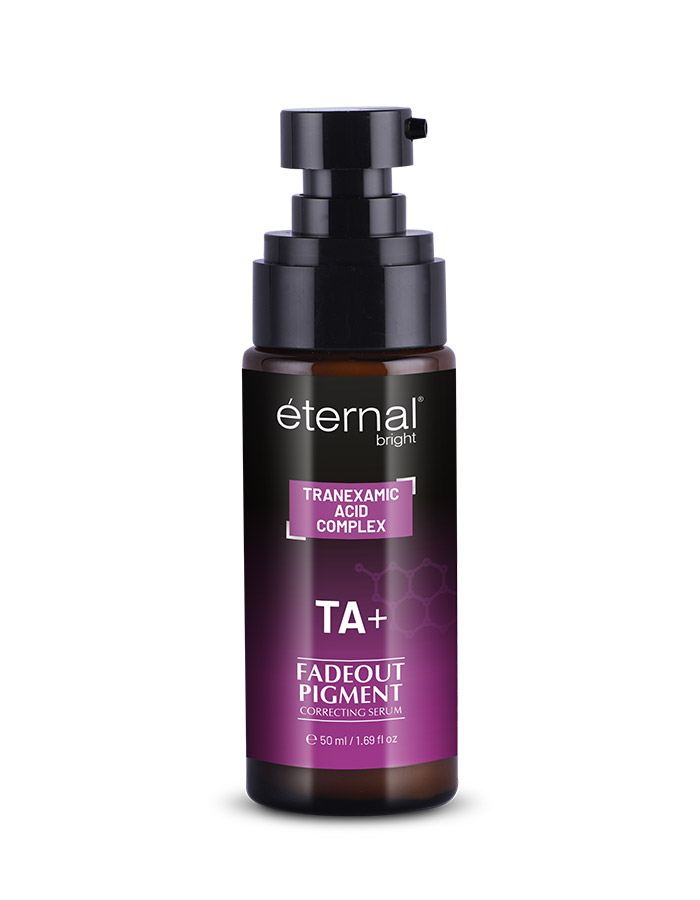
- Eternal Bright Fadeout Pigment Correcting Serum
- Pigmentation is rarely a one-pathway problem.
- The Fadeout approach combines multiple pigmentation-focused ingredients rather than making one hero ingredient responsible for everything.
- This is particularly relevant to Indian consumers dealing with:
- post-acne marks,
- uneven pigmentation,
- or recurring visible discoloration.
- But persistent, worsening or unexplained pigmentation still deserves dermatologist assessment.
- A serum is not a diagnosis.
- —
- IF YOU’RE LOOKING FOR BRIGHTENING SUPPORT
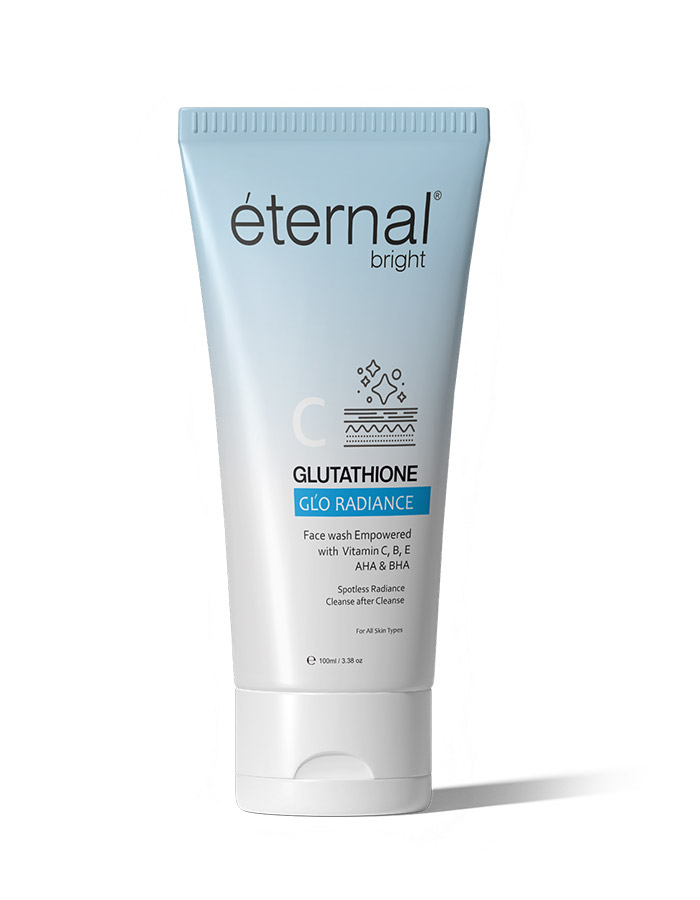
- Eternal Bright Gluta Serum
- Glutathione has become heavily associated with “fairness.”
- That isn’t how we should talk about it.
- Your natural colour is not a condition.
- A far better goal is:
- more even-looking,
- clearer-looking,
- more radiant skin.
- Eternal Bright’s glutathione approach belongs in that conversation rather than promising to transform someone into a different skin tone.
- —
- IF YOUR BARRIER NEEDS HELP
- Eternal Bright Double Repair Moisturizer
- This might be less exciting on Instagram than another acid.
- It may also be exactly what irritated young skin actually needs.
- Barrier support becomes especially important when a routine contains:
- acne treatments,
- retinoids,
- exfoliants,
- or pigmentation actives.
- Sometimes the smartest thing you can add to your routine isn’t another treatment.
- It’s recovery.
- —
- AND THEN THERE IS SUNSCREEN
- Eternal Bright / Solreva Sun Protection
- Whatever serum you choose, photoprotection remains foundational.
- Particularly if you’re treating pigmentation.
- Particularly if you’re using exfoliants.
- Particularly if you’re using retinoids.
- Particularly if you live under the Indian sun.
- There is no prestige in owning excellent pigmentation serums while consistently skipping sunscreen.
- —
- WHAT ETERNAL BRIGHT SHOULD NOT DO
- If we genuinely want young consumers to trust the brand, Eternal Bright should sometimes say:
- You don’t need this product.
- That is powerful.
- If you are 20 with:
- comfortable skin,
- no acne,
- no pigmentation,
- no particular concern,
- and a functioning routine…
- you do not need seven treatment serums simply because we manufacture them.
- Use:
- a suitable cleanser,
- moisturiser if needed,
- sunscreen,
- and enjoy having uncomplicated skin.
- SKINCARE SHOULD SERVE YOUR SKIN.
- YOUR SKIN DOESN’T EXIST TO SERVE SKINCARE.
- —
- WHEN YOU SHOULD SEE A DERMATOLOGIST INSTEAD OF BUYING ANOTHER PRODUCT
- Please get professional evaluation for:
- persistent moderate-to-severe acne,
- painful cysts or nodules,
- acne scarring,
- sudden or unexplained pigmentation,
- persistent rash,
- recurrent burning or itching,
- severe sensitivity,
- hair loss,
- changing moles or lesions,
- or a skin problem that is significantly affecting your life.
- No responsible skincare brand should try to replace medical care.
- —
- A SIMPLE ROUTINE FOR DIFFERENT YOUNG-SKIN CONCERNS
- OILY + ACNE-PRONE
- AM
- Gentle cleanser
- Acne treatment if advised
- Light moisturiser
- Non-comedogenic sunscreen
- PM
- Cleanser
- Evidence-based acne treatment
- Moisturiser
- Do not build the routine around drying the face into submission.
- —
- ACNE + POST-ACNE MARKS
- First:
- CONTROL THE ACNE.
- Then:
- MANAGE THE MARKS.
- Brightening every old mark while new inflammatory lesions continue developing is inefficient.
- Your routine may eventually incorporate appropriate pigmentation ingredients—but don’t neglect the cause creating the pigmentation.
- —
- DRY / DEHYDRATED
- Think less:
- acid.
- Think more:
- gentle cleansing,
- humectants,
- emollients,
- barrier support,
- sunscreen.
- Dry skin does not need punishment.
- —
- DULL / UNEVEN-LOOKING
- Consider:
- vitamin C,
- niacinamide,
- appropriate exfoliation,
- hydration,
- and especially sunscreen.
- But introduce treatments gradually.
- —
- SENSITIVE / EASILY IRRITATED
- Your routine may need to be boring.
- That can be a compliment.
- Cleanser.
- Moisturiser.
- Sunscreen.
- Then introduce treatments only when you know why they are needed.
- —
- THE MOST IMPORTANT SKINCARE LESSON FOR INDIA’S YOUNG GENERATION
- Your parents’ generation was often sold:
- FAIRNESS.
- Your generation is being sold:
- PERFECTION.
- Different word.
- Similar pressure.
- Previously:
- “Become fairer.”
- Now:
- “Remove every pore.”
- “Have glass skin.”
- “Have no texture.”
- “Never age.”
- “Glow 24/7.”
- Neither is particularly healthy skincare thinking.
- Normal skin has:
- pores.
- texture.
- oil.
- hair.
- lines.
- variation.
- occasional breakouts.
- Skincare can improve concerns.
- It should not teach you to treat normal human skin as defective.
- —
- A BETTER GOAL
- Instead of:
- PERFECT SKIN
- Aim for:
- HEALTHY, FUNCTIONING, WELL-CARED-FOR SKIN.
- Skin that you:
- understand.
- protect.
- treat appropriately.
- and don’t constantly attack.
- —
- THE ETERNAL BRIGHT YOUTH SKINCARE MANIFESTO
- Don’t buy skincare because you’re afraid of your skin.
- Understand it.
- Don’t treat your complexion like a problem.
- Treat the concern.
- Don’t chase every ingredient.
- Choose the function.
- Don’t confuse irritation with effectiveness.
- Respect the barrier.
- Don’t wait for pigmentation before thinking about the sun.
- Protect early.
- Don’t change your routine every time your feed changes.
- Give skincare time.
- Don’t buy more because you know less.
- UNDERSTAND MORE.
- CHOOSE BETTER.
- Because becoming a sophisticated skincare consumer isn’t about knowing the names of 50 actives.
- It’s knowing when not to use one.
- —
- THE FINAL WORD
- If you’re young in India today, you have access to more skincare knowledge than any generation before you.
- You also have access to more skincare marketing than any generation before you.
- The challenge isn’t finding another product.
- The challenge is learning how to choose.
- Start here:
- CONCERN → BENEFIT → INGREDIENT → FORMULATION → VALUE → TRUST
- Ask:
- What is my concern?
- What benefit am I looking for?
- Which ingredient has a rational role?
- Is it formulated intelligently?
- Is the product worth what I’m paying?
- Do I trust the company making the promise?
- Then buy.
- Not before.
- Eternal Bright
- WE DON’T JUST WANT YOU TO BUY BETTER SKINCARE.
- WE WANT YOU TO BUY SKINCARE BETTER.
- That is probably the most useful skincare lesson we can give India’s next generation.