Types of Pigmentation in Indian Skin: Why Diagnosis Matters More Than the Brightening Cream
Not every brown patch is the same pigmentation.
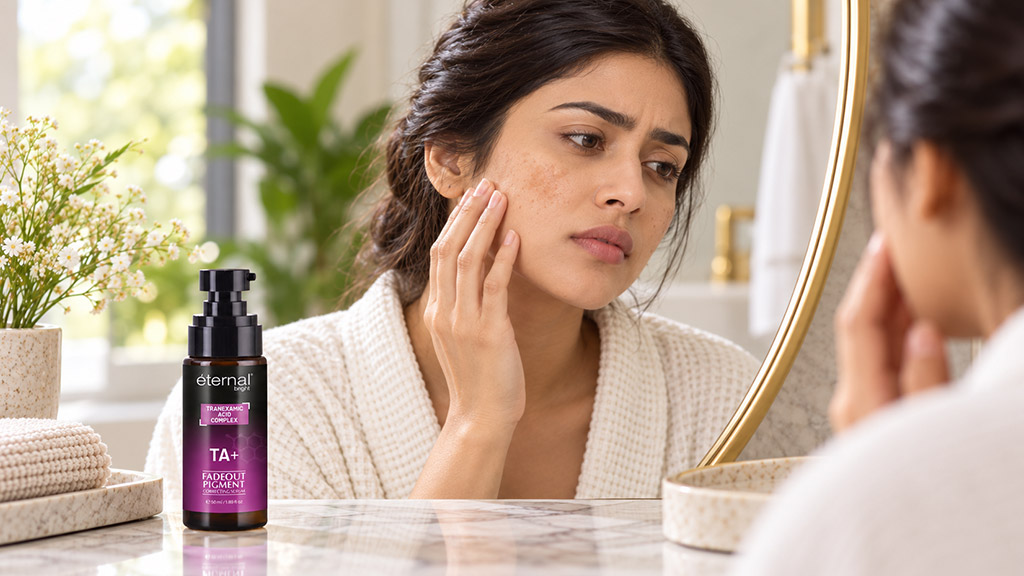
Because that is exactly where Indian consumers go wrong. They see anything dark and buy the same “brightening serum.” But melasma, post-acne marks, under-eye pigmentation, lichen planus pigmentosus, tanning and acanthosis nigricans can look superficially similar while having very different causes and management.
Melasma, post-acne marks, dark circles, tanning, LPP, acanthosis nigricans and more—explained for Indian skin.
There is one sentence I wish every patient with pigmentation would hear before buying another serum:
Pigmentation is a colour. It is not a diagnosis.
Two people can walk into a dermatology clinic saying:
“Doctor, my face is getting dark.”
One may have melasma.
The other may have post-inflammatory hyperpigmentation.
A third may have pigmented contact dermatitis from cosmetics or hair colour.
Someone else may actually have facial acanthosis nigricans associated with insulin resistance.
They are all “brown.”
But they are not the same disease.
And treating them as though they are is one reason pigmentation becomes so frustrating.
Indian experts recently identified melasma, acquired dermal macular hyperpigmentation, post-inflammatory hyperpigmentation and periorbital hyperpigmentation as four major priority pigmentary conditions in the Indian population.
So before we discuss treatment, we need to learn how to recognize the different stories pigmentation can tell.
Why Pigmentation Is Such a Big Issue in Indian Skin
Indian skin contains a wide spectrum of tones.
So there is no single “Indian skin type.”
However, many Indians fall within more melanized phototypes, and this changes the behaviour of inflammation and pigment.
When skin becomes inflamed—from acne, eczema, friction, a procedure, a burn or even aggressive skincare—melanocytes may respond by producing or redistributing more pigment.
This is one reason post-inflammatory hyperpigmentation can be more obvious, more persistent and more distressing in darker skin tones. A systematic review of skin of colour found PIH to be particularly persistent and difficult to treat, with some procedures capable of worsening it rather than improving it.
This gives us the first rule of pigmentation management:
The more pigment-prone the skin, the more carefully we should control inflammation.
Aggressive treatment is not automatically better treatment.
First, Understand Where the Pigment Is
One very useful way dermatologists think about pigmentation is by asking:
- Is the excess pigment mainly in the epidermis?
- Is it deeper in the dermis?
- Or is it mixed?
This matters because depth affects both appearance and response.
Epidermal Pigmentation
Often looks more brown and tends to respond more predictably to topical treatments.
Dermal Pigmentation
May appear more grey-brown, ashy or bluish-grey and can be much harder to treat because pigment has moved deeper.
Mixed Pigmentation
Contains elements of both.
This is one reason somebody else’s brightening routine may do absolutely nothing for yours.
Same colour family. Different depth. Different management.
Type 1 — Melasma
The pigmentation that loves to come back.
Melasma is one of the most familiar facial pigmentation disorders in India.
It commonly presents as symmetrical brown or grey-brown patches on areas such as:
- the cheeks,
- forehead,
- upper lip,
- nose,
- and sometimes jawline.
Women are affected more commonly, although men can certainly develop it.
Melasma is associated with multiple influences including:
- sunlight,
- visible light,
- hormonal factors,
- pregnancy,
- genetic susceptibility,
- and possibly other environmental triggers.
Indian expert guidance continues to emphasize that melasma is chronic and relapsing, which means the realistic goal is usually control and maintenance—not a permanent once-and-for-all cure.
How Do I Know if It May Be Melasma?
Think:
- symmetrical rather than one random spot.
- patches rather than isolated acne marks.
- recurring especially with sun or heat exposure.
- commonly over cheeks, forehead and upper lip.
But self-diagnosis is still risky because multiple pigmentary disorders can mimic melasma.
Melasma Management
A typical dermatologist-led approach may include:
Photoprotection
This is foundational.
Not optional.
Broad-spectrum sunscreen is essential, and for melasma, visible light may also matter. Indian consensus literature has highlighted the value of sunscreens containing iron oxides, particularly because visible-light protection can be relevant in pigmentation.
Prescription Depigmenting Therapy
Hydroquinone remains a major medical treatment in appropriately selected patients.
Supervised triple-combination creams have strong evidence, but misuse—especially of steroid-containing combinations—is a genuine problem.
This is not something I would recommend treating casually from a social-media reel.
Alternatives and Adjuncts
Depending on the patient, dermatologists may use:
- azelaic acid,
- kojic acid,
- retinoids,
- vitamin C,
- arbutin,
- tranexamic acid,
- or combination therapy.
Recent global consensus continues to place hydroquinone-based triple combination therapy among the strongest medical options, with azelaic acid, kojic acid and tranexamic acid as alternatives or adjuncts.
What About Oral Tranexamic Acid?
This deserves caution.
Oral tranexamic acid has increasingly been used by dermatologists in selected melasma patients.
But it is not a casual beauty supplement.
Indian expert consensus recommends assessing for:
- thromboembolic risk,
- cardiovascular history,
- menstrual history,
- and relevant investigations before prescribing it.
So please do not purchase oral tranexamic acid online because someone called it a “melasma tablet.”
Medical treatments deserve medical screening.
Type 2 — Post-Inflammatory Hyperpigmentation
The mark left after the problem.
This is one of the biggest pigmentation issues in younger Indian patients.
You had:
- a pimple,
- rash,
- eczema,
- burn,
- scratch,
- waxing reaction,
- chemical irritation,
- or procedure.
The inflammation settles.
But a brown or grey mark remains.
That is:
Post-inflammatory hyperpigmentation — PIH.
A systematic review of skin-of-colour patients found that inflammatory skin conditions accounted for the majority of PIH cases studied, and the face was the most common location.
The Biggest Mistake With PIH
Treating the pigmentation while allowing the inflammation to continue.
If you still develop:
- new acne,
- new irritation,
- new eczema,
- or ongoing friction,
you are continuing to create new pigment.
So:
Treat the fire first. Then treat the smoke mark.
For acne-related PIH:
control the acne.
For eczema-related PIH:
control the dermatitis.
For procedure-related PIH:
stop repeated inflammation.
What Helps PIH?
Depending on the cause and skin tolerance, management may include:
- niacinamide,
- azelaic acid,
- retinoids,
- vitamin C,
- hydroquinone under supervision,
- tranexamic-acid-based formulations,
- alpha arbutin,
- and other pigment-modulating ingredients.
Procedures may be useful selectively.
But caution is essential.
A systematic review found that retinoids and lasers could improve PIH in some patients, yet lasers also produced cases of worsening pigmentation.
And prevention matters enormously.
In a systematic review focused on PIH prevention in skin of colour, sunscreen was the only strategy that consistently demonstrated preventive benefit.
That should tell you something.
The best pigment treatment sometimes starts before the pigment appears.
Type 3 — Acquired Dermal Macular Hyperpigmentation
This is the category many consumers have never heard of.
And yet it is particularly relevant in India.
Acquired dermal macular hyperpigmentation—ADMH—is an umbrella term covering several related conditions in which pigment becomes deposited deeper in the skin following subtle interface inflammation.
It includes disorders such as:
- Lichen planus pigmentosus
- Riehl’s melanosis / pigmented contact dermatitis
- Erythema dyschromicum perstans / ashy dermatosis
These conditions can look grey-brown, slate-grey or muddy rather than simple tan brown.
ADMH is challenging because these disorders can resemble one another and may be difficult to treat.
Type 3A — Lichen Planus Pigmentosus
The pigmentation that may not behave like melasma.
Lichen planus pigmentosus, or LPP, is seen relatively frequently in Indian patients.
It may present as:
- grey-brown pigmentation,
- often over the face and neck,
- sometimes beginning around the temples or forehead,
- and sometimes extending beyond classic melasma areas.
Potential triggers have included:
- fragrances,
- cosmetics,
- hair dyes,
- mustard oil,
- amla oil,
- and sun exposure,
although the exact cause is not completely understood.
This is important because if LPP is mistaken for melasma, repeatedly treating it with aggressive procedures may give disappointing—or occasionally worse—results.
How Is LPP Managed?
Dermatologists may consider:
- trigger avoidance,
- photoprotection,
- topical calcineurin inhibitors such as tacrolimus,
- anti-inflammatory therapies,
- and selected systemic or procedural options in appropriate cases.
Evidence remains limited compared with more common conditions such as melasma.
Laser treatment requires particular caution, because studies in Indian skin have shown only variable benefit and can produce complications such as hypopigmentation or scarring.
In other words:
Not every grey patch needs a laser.
Type 3B — Riehl’s Melanosis / Pigmented Contact Dermatitis
This is an important diagnosis to remember because sometimes the “pigmentation product” is part of the problem.
Pigmented contact dermatitis can occur in response to repeated contact with allergens or irritants in products such as:
- hair dyes,
- fragrances,
- cosmetics,
- and personal-care products.
The face can gradually become brown, grey, or diffusely darker.
The pigment may be more obvious over forehead, temples, cheeks, ears, neck.
Indian literature specifically notes hair dye and henna-related exposures as potentially relevant in Riehl’s melanosis/pigmented contact dermatitis.
This is why endlessly applying more brightening serums without investigating the trigger may fail.
Sometimes treatment starts by asking:
What is touching your face every day?
Type 4 — Periorbital Hyperpigmentation
“Dark circles” are not one condition.
This one deserves its own article.
A person sees darkness under the eyes and assumes:
pigmentation.
But under-eye darkness can come from:
- true melanin pigmentation,
- thin skin with visible vessels,
- shadowing from tear troughs,
- allergic rubbing,
- eczema,
- genetic anatomy,
- volume loss,
- or combinations of these.
That is why one person’s caffeine eye serum can appear brilliant while another person’s does absolutely nothing.
The 2026 Indian consensus specifically identified periorbital hyperpigmentation as a major priority condition in Indian patients.
How Do You Manage Dark Circles?
First determine the cause.
If predominantly pigmentation:
brightening ingredients may help.
If inflammation/allergy:
control rubbing, eczema or allergy.
If vascular:
topical depigmenting treatment alone may not solve it.
If structural shadow:
fillers or other aesthetic approaches may sometimes be considered by experienced clinicians.
So:
Dark circles are easy to see. The reason isn’t.
Type 5 — Acanthosis Nigricans
This one is extremely important because it can be more than a cosmetic problem.
Acanthosis nigricans typically appears as dark, thickened, velvety skin, often around:
- the neck,
- underarms,
- groin,
- or other folds.
It can also occur on the face.
Facial acanthosis nigricans may show ill-defined brown-to-black pigmentation with textural change, often over the forehead, temples and cheeks, and can be confused with other facial pigmentation disorders.
Why Acanthosis Nigricans Matters
Because it is commonly associated with:
- insulin resistance,
- obesity,
- prediabetes,
- type 2 diabetes,
- PCOS,
- and metabolic syndrome.
An Indian expert group has emphasized acanthosis nigricans as a useful visible marker that may help identify underlying insulin resistance and metabolic disease early.
So if the neck is dark and thickened:
Please don’t just scrub harder.
And don’t assume:
“It’s dirt.”
It may be your skin telling you something about metabolic health.
Management of Acanthosis Nigricans
Treating the underlying metabolic driver matters more than simply bleaching the surface.
Management may include:
- weight management when appropriate,
- evaluation for insulin resistance,
- screening for diabetes,
- assessment for PCOS where relevant,
- and topical treatment for texture and pigmentation as an adjunct.
This is a perfect example of why dermatology isn’t simply cosmetic skincare.
Sometimes pigment is information.
Type 6 — Sun Tan and Chronic Sun-Induced Pigmentation
Let’s separate two things.
Tan
A tanning response occurs when UV exposure stimulates increased melanin production.
It is a response to UV injury.
It is not a “healthy glow.”
Repeated UV exposure also contributes to:
- persistent uneven pigmentation,
- photoageing,
- and solar lentigines.
Solar Lentigines
These are commonly called:
- sun spots,
- age spots,
- or liver spots.
They often appear as discrete flat brown spots on chronically sun-exposed areas such as face, hands, forearms.
They become more common with cumulative UV exposure.
Management can include:
- photoprotection,
- topical agents,
- chemical peels,
- laser or light-based therapy,
- depending on the diagnosis and skin tone.
But again:
a dermatologist should distinguish a benign lentigo from other pigmented lesions before treating it.
Type 7 — Freckles
Freckles—or ephelides—are generally small, flat, brown spots that become more noticeable with sun exposure.
Genetics plays an important role.
They are not the same as melasma.
And they are not necessarily a disease.
If somebody likes their freckles:
there is absolutely no dermatological law requiring them to remove them.
Type 8 — Frictional Pigmentation
Sometimes pigment has a very simple mechanical cause:
repeated friction.
Examples include:
- rubbing,
- tight clothing,
- scratching,
- rough towels,
- chronic mask friction,
- jewellery,
- or repetitive irritation.
Indian facial-pigmentation reviews increasingly recognize frictional facial melanosis as an under-recognized cause of facial darkening.
This is another reason why applying increasingly aggressive exfoliation can be exactly the wrong solution.
If friction is the trigger:
reducing friction is treatment.
Type 9 — Maturational Hyperpigmentation
As people age, diffuse facial pigmentation can gradually increase.
This can overlap with:
- sun exposure,
- metabolic factors,
- friction,
- and individual genetic tendency.
Recent Indian literature has highlighted maturational hyperpigmentation as another relatively under-recognized cause of facial melanosis.
Again:
not everything that looks like melasma is melasma.
Type 10 — Lip Pigmentation
Dark lips are another common Indian concern.
Possible contributors include:
- genetics,
- UV exposure,
- smoking,
- repeated lip licking,
- allergic or irritant reactions,
- lip cosmetics,
- certain medications,
- and post-inflammatory pigmentation.
Smoking in particular can stimulate oral melanosis through melanocyte activation and increased melanin deposition.
But please resist the social-media trend of:
- lemon,
- baking soda,
- toothbrush scrubbing,
- or strong acids on lips.
Repeated irritation can make pigmentation worse.
So How Does a Dermatologist Actually Approach Pigmentation?
This is the section I would want every patient to understand.
There is a sequence.
Diagnosis before depigmentation.
A dermatologist may consider:
Pattern
- Symmetrical?
- Patchy?
- Single lesion?
- Diffuse?
Colour
- Brown?
- Grey?
- Blue-grey?
- Black?
Location
- Cheeks?
- Forehead?
- Upper lip?
- Neck?
- Under-eye?
- Folds?
Texture
- Completely flat?
- Velvety?
- Scaly?
- Inflamed?
History
- When did it start?
- Did acne come first?
- Pregnancy?
- Hormones?
- New cosmetics?
- Hair dye?
- Sun exposure?
- Friction?
- Medications?
Sometimes Additional Tools
- Wood’s lamp,
- dermoscopy,
- patch testing,
- blood tests,
- or biopsy,
- depending on the case.
That diagnostic work is not an inconvenience before treatment.
It is part of the treatment.
The Universal Management Framework
Pigmentation management becomes much easier to understand if we divide it into five steps.
Step 1 — Remove or Control the Trigger
Acne?
Control acne.
Eczema?
Treat inflammation.
Hair-dye allergy?
Remove trigger.
Friction?
Stop friction.
Insulin resistance?
Address metabolic health.
UV?
Improve photoprotection.
If the trigger continues, pigment continues.
Step 2 — Protect From Light
For most facial hyperpigmentation disorders:
sunscreen matters.
And not only because of sunburn.
UV exposure can activate pigmentation pathways.
For melasma particularly, visible-light protection can also matter, which is why tinted sunscreens containing iron oxides are increasingly relevant.
Indian expert guidance consistently places photoprotection at the foundation of melasma and pigmentation management.
A reasonable approach typically includes:
- Broad-spectrum SPF 30+ or higher
- Adequate quantity
- Reapplication when needed
- Hats/shade where practical
- Tinted/iron-oxide sunscreen in selected pigmentation cases
Step 3 — Use Pigment-Targeting Ingredients Intelligently
There are many options.
No single ingredient wins every case.
Commonly used ingredients include:
Hydroquinone
A well-established prescription depigmenting agent.
Very useful when appropriately supervised.
Not something to misuse indefinitely.
Azelaic Acid
Useful in pigmentation and acne-prone skin.
Retinoids
Can improve cell turnover and support pigmentation management, but irritation must be controlled.
Niacinamide
Supports pigmentation management and the skin barrier.
Vitamin C
Useful as an antioxidant and brightening-support ingredient.
Alpha Arbutin
Used in cosmetic pigmentation formulas.
Kojic Acid
Common depigmenting adjunct.
Tranexamic Acid
Used topically and, in selected medical cases, orally under supervision.
Cysteamine
An increasingly discussed depigmenting option in some pigmentation protocols.
The key is not:
More brightening ingredients.
The key is:
The right ingredients for the right diagnosis.
Step 4 — Procedures Only When They Add Value
Procedures may include:
- chemical peels,
- microneedling,
- Q-switched lasers,
- picosecond lasers,
- fractional lasers,
- IPL,
- and combination treatments.
But this is where Indian skin requires restraint.
Procedures that create inflammation can also create:
more pigment.
The PIH literature specifically documents worsening in some skin-of-colour patients following lasers.
So:
Laser is a device. Not a diagnosis.
The correct question isn’t:
“Which laser removes pigmentation?”
It is:
“What pigmentation do I have, and does a laser have a rational role in treating it?”
Step 5 — Maintenance
This is the step nobody likes hearing.
You improve melasma.
You stop everything.
You go back into intense UV exposure.
Pigment returns.
And suddenly:
“The treatment failed.”
Not necessarily.
Some pigmentation disorders naturally relapse.
Maintenance can include:
- sun protection,
- gentle pigment-control ingredients,
- avoiding triggers,
- and occasional dermatologist follow-up.
Pigmentation treatment is often not:
Treat → finish.
It is:
Control → improve → maintain.
Can Pigmentation Be Completely Removed?
Sometimes individual spots can respond extremely well.
But “all pigmentation permanently removed” is not a sensible universal promise.
Results depend on:
- the diagnosis,
- depth,
- duration,
- trigger,
- skin phototype,
- treatment used,
- and ongoing exposure.
PIH may gradually resolve.
A lentigo may respond beautifully.
Melasma commonly relapses.
Dermal pigmentation can be stubborn.
Acanthosis nigricans needs underlying metabolic management.
So expectations matter.
Why “Fairness” Is the Wrong Goal
This is particularly relevant in India.
Pigmentation management is often marketed as:
fairness.
But there is a major biological difference between correcting excess or uneven pigmentation and trying to change someone’s genetically determined natural skin colour.
Healthy dermatology should not tell someone their baseline complexion is a disease.
We should treat:
- melasma,
- post-acne marks,
- sun damage,
- pathological pigmentation,
- and uneven tone
when they bother the patient.
Not manufacture dissatisfaction with natural melanin.
Natural skin colour is not pigmentation that needs treatment.
Where Eternal Bright Fits Into This Conversation
This is where a skincare brand needs to be careful.
A pigmentation serum should not pretend to diagnose pigmentation.
But it can support specific cosmetic concerns such as:
- uneven-looking tone,
- post-blemish marks,
- dullness,
- and selected superficial pigmentation.
For Eternal Bright, the strongest role is therefore:
Concern-first skincare.
Not:
“Use Fadeout for every dark patch.”
Instead:
Know what you’re treating.
Then choose appropriately.
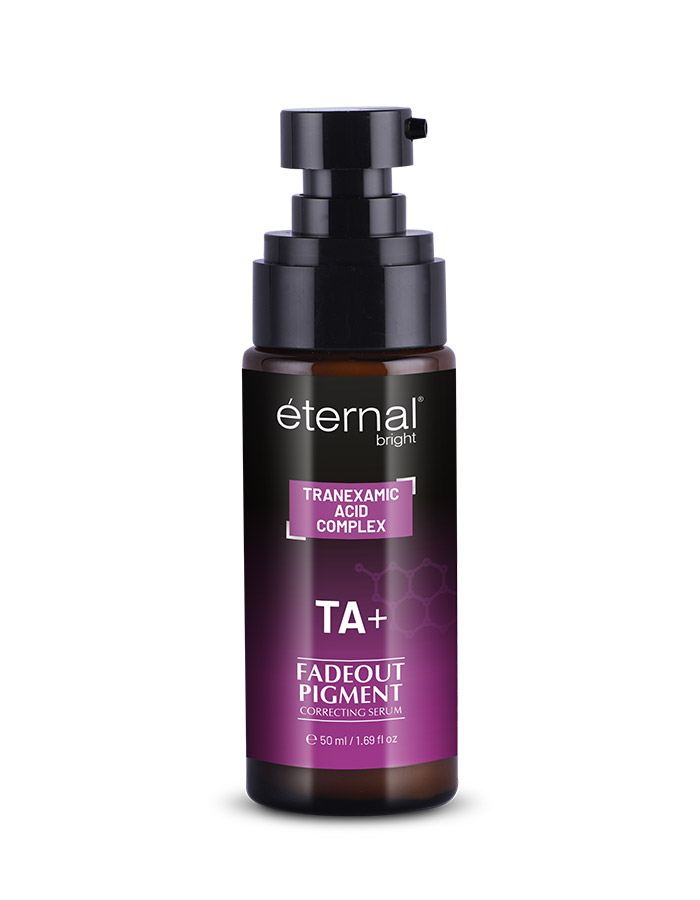
Eternal Bright Fadeout Pigment Correcting Serum
For appropriate cosmetic pigmentation concerns, Fadeout takes a multi-pathway formulation approach rather than depending on one famous ingredient.
Its formulation combines pigmentation-focused actives including:
- Tranexamic-acid delivery technology
- 4-Butylresorcinol
- Azelaic Acid
- 5% Niacinamide
- Phytic Acid
- Licorice
The strategic logic is:
pigmentation is multifactorial,
so a formulation can address more than one pigmentation pathway.
But the important caveat remains:
A serum can treat a concern. It cannot diagnose the condition.
If pigmentation is:
- rapidly worsening,
- grey and diffuse,
- symmetrical and recurrent,
- associated with thickening,
- itching,
- rash,
- or resistant to appropriate skincare,
a dermatologist should evaluate it.
The 10-Second Pigmentation Check
Before buying another brightening product, ask yourself:
- Did this appear after acne?
Think PIH. - Is it symmetrical over cheeks/forehead/upper lip?
Consider melasma. - Is it grey-brown and spreading around temples/neck?
Needs evaluation for dermal melanosis/LPP/PCD. - Is my neck dark and velvety?
Consider acanthosis nigricans and metabolic evaluation. - Is the darkness only under my eyes?
Determine whether pigment, vessels or shadow dominates. - Is it one isolated changing dark lesion?
Do not self-treat. Get it examined.
And the most important:
If you don’t know what it is, don’t treat it aggressively.
Five Things I Would Never Do With Indian Pigment-Prone Skin
- I would not scrub pigmentation away.Pigment is not dirt.
- I would not stack six acids because the marks aren’t fading fast enough.Irritation can deepen PIH.
- I would not use steroid-containing “fairness creams” without medical supervision.Long-term misuse can cause serious problems.
- I would not laser an undiagnosed brown patch.Diagnosis first.
- I would not promise permanent melasma removal.Maintenance is part of realistic management.
The Final Message
When patients say:
“Doctor, I have pigmentation.”
My next question shouldn’t be:
“Which brightening cream have you tried?”
It should be:
“What kind of pigmentation?”
Because:
melasma isn’t PIH.
PIH isn’t LPP.
LPP isn’t tanning.
Tanning isn’t acanthosis nigricans.
Dark circles aren’t always pigment.
And brown skin itself isn’t a problem to solve.
Once we understand the diagnosis, treatment becomes much more intelligent.
- Protect.
- Control inflammation.
- Target the right pathway.
- Use procedures selectively.
- Maintain the result.
And perhaps the single most important principle for Indian pigment-prone skin is:
Don’t treat pigment harder. Treat it smarter.
SEO FAQ
What Are the Most Common Types of Pigmentation in Indian Skin?
Important conditions include melasma, post-inflammatory hyperpigmentation, acquired dermal macular hyperpigmentation, periorbital hyperpigmentation, tanning, lentigines and acanthosis nigricans. Recent Indian expert consensus particularly prioritizes melasma, ADMH, PIH and periorbital hyperpigmentation.
Why Does Indian Skin Pigment Easily After Acne?
Inflammation can stimulate excess melanin production and deposition. PIH tends to be more prominent and persistent in more deeply pigmented skin types.
Is Melasma Permanent?
Melasma is generally considered chronic and relapsing. Treatment can produce substantial improvement, but maintenance and photoprotection are often necessary.
What Is the Best Treatment for Pigmentation?
There is no universal “best” treatment because management depends on diagnosis, pigment depth, skin type and trigger.
Does Sunscreen Remove Pigmentation?
Sunscreen is not a depigmenting drug, but it helps prevent UV-triggered worsening and is foundational to treatment. It was also the most consistently successful preventive intervention for PIH in a recent skin-of-colour review.
Can Lasers Worsen Pigmentation?
Yes. Especially in skin of colour, inflammatory procedures can sometimes trigger or worsen PIH. Proper patient selection, diagnosis, settings and aftercare are critical.
Why Is My Neck Darker Than My Face?
A dark, velvety neck may be acanthosis nigricans, which can be associated with insulin resistance, obesity, PCOS, prediabetes and diabetes. Medical evaluation can be important.
Are Dark Circles Pigmentation?
Sometimes. But dark circles can also result from vascular visibility, thin skin, structural shadowing, allergies, rubbing or volume loss. The cause determines treatment.
Can Eternal Bright Fadeout Serum Treat All Pigmentation?
No cosmetic serum should be positioned as treatment for every pigmentary disorder. Fadeout is better suited to selected cosmetic concerns such as uneven-looking tone and post-blemish pigmentation; persistent or unusual pigmentation should be diagnosed by a dermatologist.
They’re All Brown. They’re Not All the Same.
Melasma. PIH. LPP. Dark Circles. Acanthosis. Sun Damage.
Before you treat pigmentation, name it.
That could become an exceptional Eternal Bright educational campaign because it immediately creates curiosity while teaching the core dermatological truth behind the entire article.